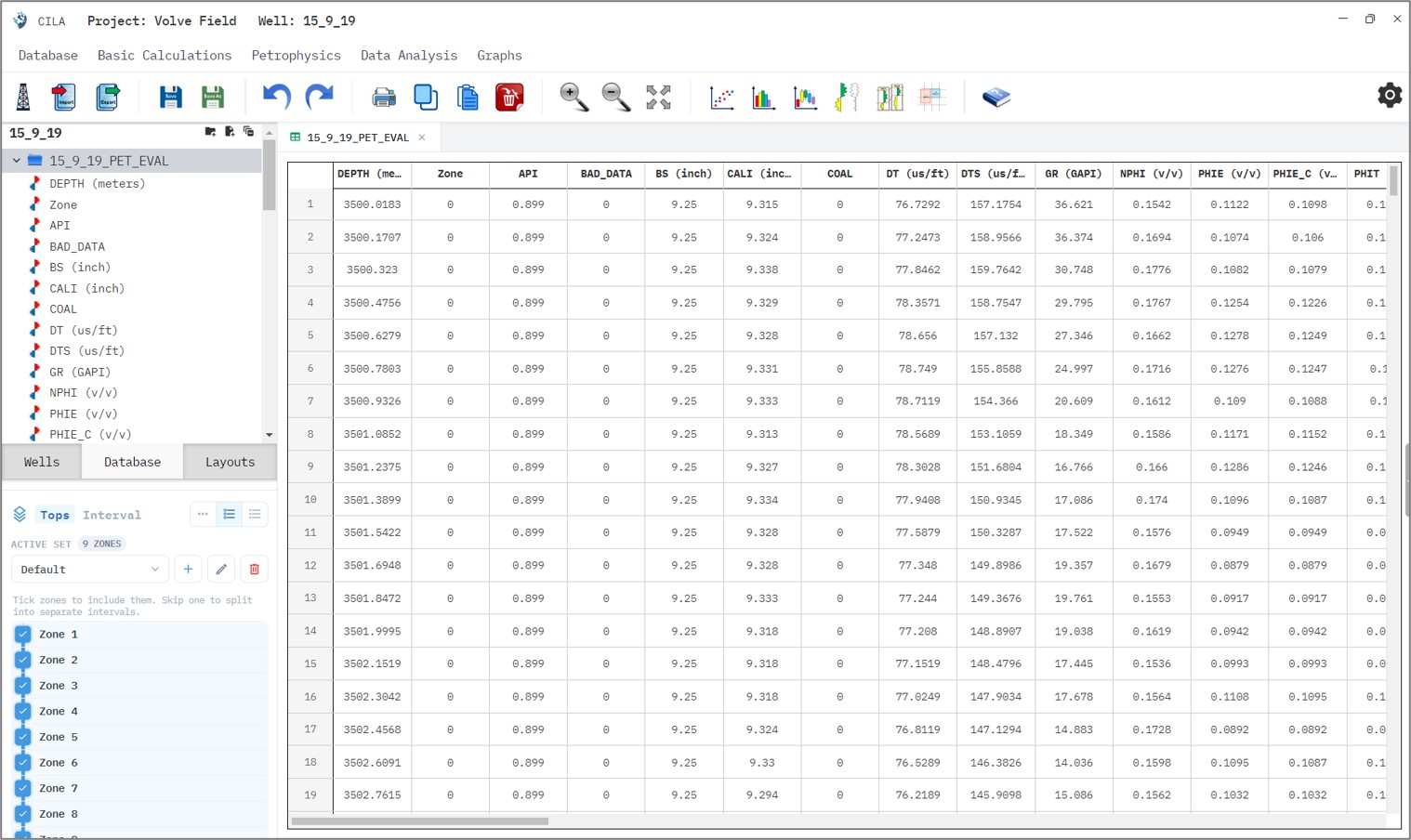
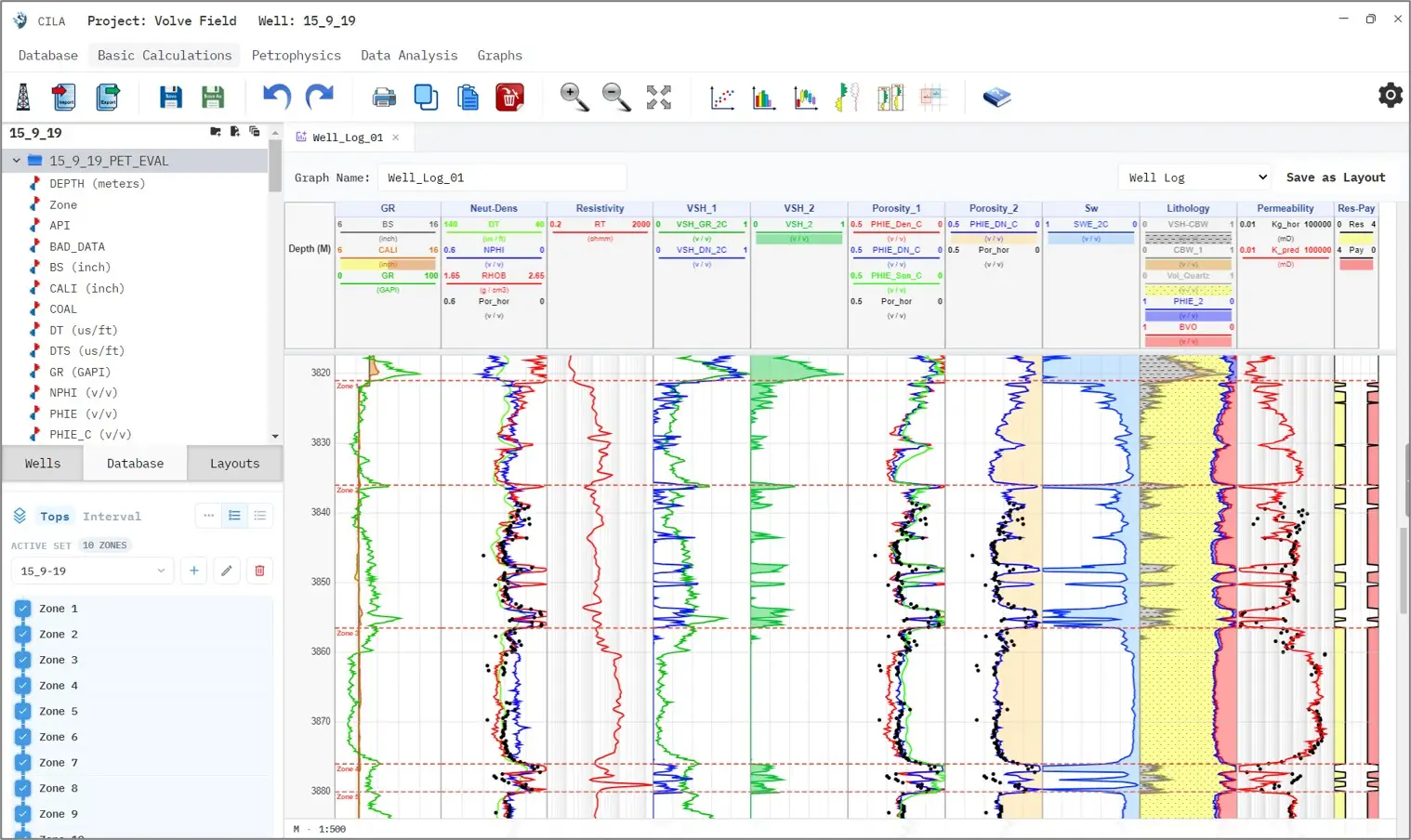
ROQ AI is developing CILA, an advanced cloud‑based petrophysical evaluation platform designed to deliver comprehensive, high‑quality analyses through enhanced data integration and the application of robust equations and algorithms.
CILA is built to support sound and consistent petrophysical evaluation of both conventional and unconventional reservoirs, enabling users to interpret complex datasets with confidence. The platform leverages advanced computational methods to ensure accurate characterisation of rock and fluid properties across a wide range of reservoir types.
The software provides intuitive, user‑friendly interfaces and streamlined workflows that support both deterministic and probabilistic petrophysical evaluations, allowing users to quantify uncertainty, improve interpretation robustness, and support better decision‑making.
CILA is underpinned by a secure, cloud‑based database architecture that enables seamless integration of all relevant subsurface data types including petrophysical well logs, core measurements, geological information, mud‑logging data, and dynamic reservoir data, all accessible within a unified analytical environment.
In addition, the platform incorporates advanced data analytics capabilities, with specialised algorithms designed for efficient data clustering, rock typing, and predictive modelling. These tools provide deeper insights into reservoir heterogeneity and support more accurate reservoir characterisation and development planning.
Integration of Core Data
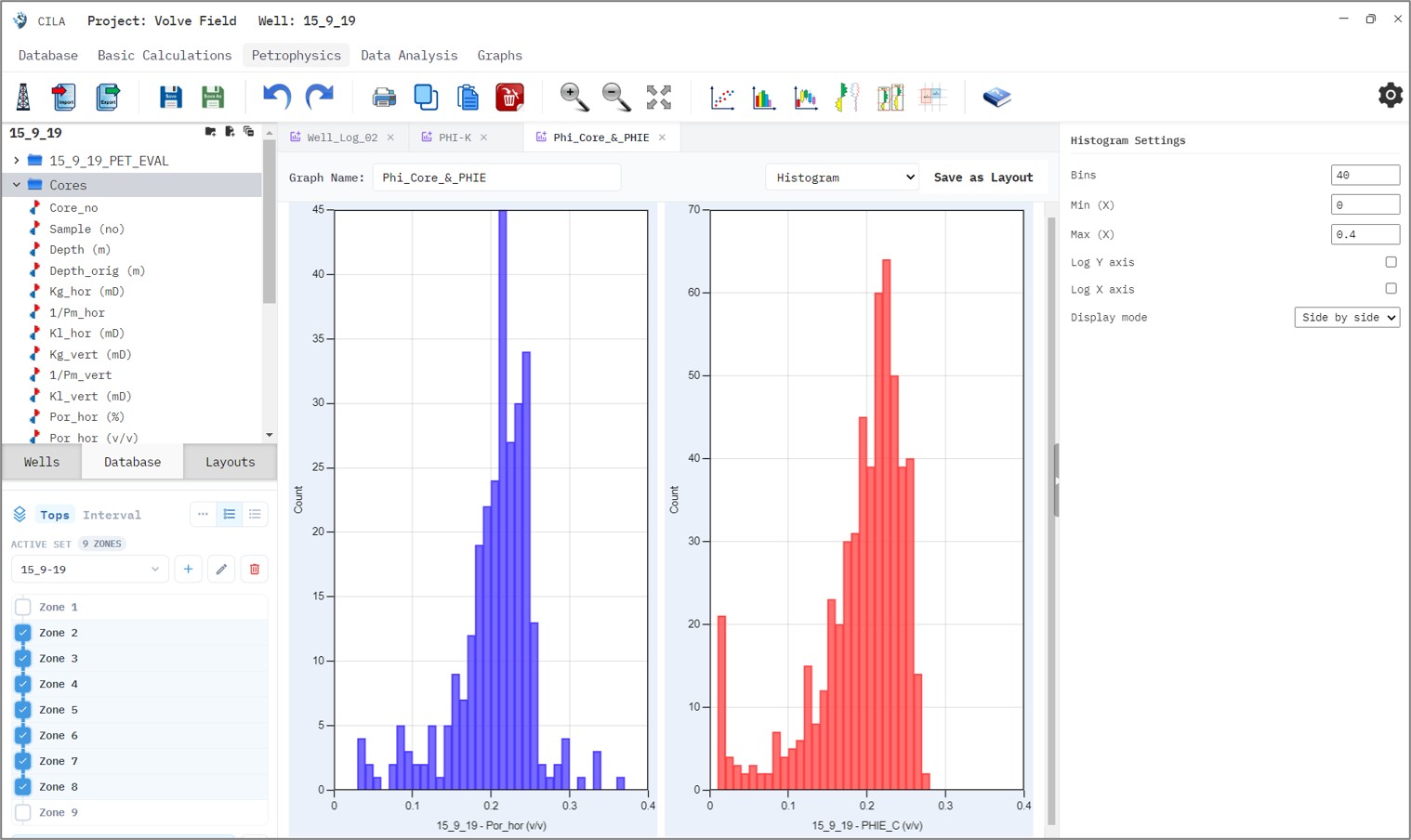
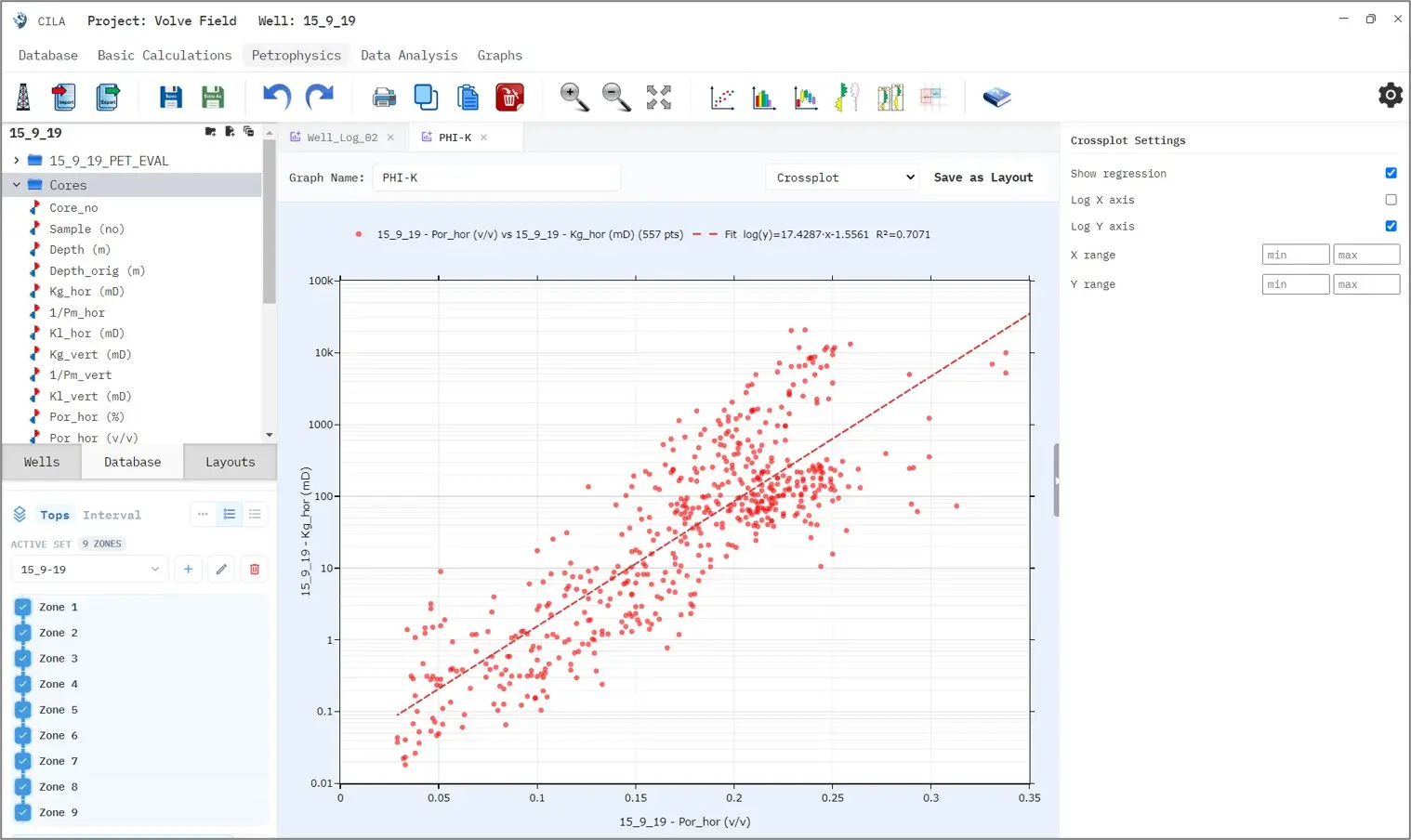
CILA enables advanced integration of CCAL and SCAL core data to support comprehensive petrophysical evaluation, accurate water saturation modelling, and robust rock typing workflows. By consolidating laboratory‑derived core measurements with subsurface interpretation, the platform enhances the reliability of reservoir characterisation.
The system provides a unified, cross‑disciplinary environment that seamlessly connects petrophysical analysis with geoscience and reservoir engineering workflows. This integrated approach promotes consistent data interpretation, improves collaboration across disciplines, and supports more informed reservoir development and management decisions.
Development
ROQ AI has been actively developing the CILA software since late 2021. Since the inception of the project, the company has collaborated closely with a series of specialised development partners to support different stages of the platform’s evolution. To date, these partners have included Calibre Consulting, Launchcode, and CodexAI, each contributing technical expertise and development capacity aligned with the project’s requirements at the time.
At present, ROQ AI is working in partnership with CodexAI to deliver the next phase of CILA’s software development. This phase focuses on advancing the platform’s core capabilities, refining system architecture, and supporting the continued maturation of the product as it moves forward.
In parallel with the software development work, ROQ AI has maintained an ongoing programme of research and analysis. This research is directed at designing, validating, and implementing the robust equations, models, and algorithms that underpin CILA’s functionality. These efforts are critical to ensuring the reliability, accuracy, and scalability of the software and form a foundational component of its long-term technical viability.